 Proudly Aussie Family-Owned • Fast Dispatch on All Orders • Easy, Hassle-Free Returns


How to Organise Your Wardrobe: A Step-by-Step Guide
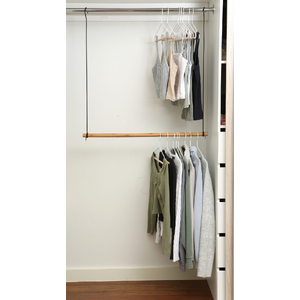
A disorganised wardrobe is one of those daily frustrations that's easy to ignore - until you're running late, can't find what you need, and end up wearing something you didn't even want to. The good news is that proper wardrobe organisation doesn't require a renovation or an entire weekend. With the right approach and a few practical wardrobe organisation ideas, even the most cluttered wardrobe can be transformed into a space that's calm and functional every single morning.
Here's how to do it - step by step.
Step 1: Take Everything Out and Declutter
Take everything out of your wardrobe before making any purchases or rearranging anything. To see exactly what you have, lay everything out on your bed.
This is the first step in a proper wardrobe declutter. If you haven’t worn something in 12 months, it’s unlikely you will - set it aside to donate or discard. The less you’re working with, the easier everything that follows becomes. While the wardrobe is empty, wipe down the shelves and rails before putting anything back.
Step 2: Upgrade Your Coat Hangers
Most people underestimate this, but it's the most significant change you can make to any wardrobe. No matter how well-organized a wardrobe is, mismatched, heavy clothes hangers waste space, harm clothing, and create an untidy appearance.
Making the switch to a consistent set of high-quality coat hangers instantly increases hanging space and improves the appearance of everything. Slim hangers in particular can almost double the number of garments you can fit on a single rail compared to standard plastic ones.
Wide-shouldered bamboo or timber hangers for jackets, blazers, and winter coats provide adequate support for heavier clothing and help structured pieces hold their shape over time.
Step 3: Sort Out Your Shoe Storage
One of the main causes of clutter in a wardrobe is shoes. They gather dust, take up space, and make it more difficult to access clothing when left on the wardrobe floor. All of that is resolved by a special shoe rack.
The right shoe storage depends on how many pairs you have and how much space you’re working with. A 2 or 3-tier bamboo shoe rack looks much more thoughtful and it is lightweight, durable, and suitable for most everyday collections and standard wardrobes. A five-tier metal shoe rack with a powder-coated finish that can accommodate up to 20 pairs is designed for everyday use in larger homes with larger collections.
Browse our full range of shoe racks and shoe storage options to find the right fit.
Step 4: Add a Clothes Rack for Overflow
Even a well-organised wardrobe has overflow - seasonal items, frequently worn pieces, or garments that need to air between wears. A clothes rack handles all of this without adding clutter.
A freestanding clothes rack in a spare room or bedroom corner gives you a specific place to store coats, everyday attire, and other items that don't need to be kept in the wardrobe all the time. Additionally, it keeps clothes fresh in between washes by allowing air to circulate around them. A portable clothes rack is perfect for renters because it moves with you and doesn't require installation.
Browse our range of clothes racks to find the right style for your home.
Step 5: Put It Back the Right Way
Knowing how to organise a wardrobe properly comes down to one principle: put things back in a way that matches how you actually get dressed. Here are the key wardrobe storage ideas that make a real difference:
Hang what wrinkles, fold what doesn't - shirts, dresses, and jackets on hangers; knitwear, T-shirts, and jeans folded on shelves. Knowing how to organise clothes saves time each morning and guards against damage.
For drawers containing socks, underwear, accessories, and folded items, a bamboo drawer divider keeps everything separated and easy to find without items shifting around with each opening.
Keep everyday items at eye level; the pieces you wear the most should be the most easily accessible. Occasion wear and off-season items are placed higher up or further back.
Once everything is back in place, consider using cedar rings or mothballs to protect your clothes from moths and silverfish, which is especially important for woolens, suits, and seasonal items that have been stored for a longer period.
Final Thoughts
A well-organized wardrobe isn't about having fewer clothes or more space; it's about using the right system. Begin with a thorough declutter, then upgrade to quality coat hangers, organize your shoe storage, and use a clothes rack for overflow. Small changes like these have a real impact on how your wardrobe looks and functions every day.
Frequently Asked Questions
How do I start organising my wardrobe?
Begin by taking everything out and decluttering - donate or discard anything you haven't worn in 12 months. Then sort what’s left into categories before putting anything back. Starting with an empty wardrobe provides a clear picture of the space and what you actually require.
What is the best coat hanger for wardrobe organisation?
Slim coat hangers are the best all-around choice because they take up minimal space, keep clothes from slipping, and are suitable for almost any garment type. Bamboo or timber hangers with wide shoulders are useful for keeping jackets and heavier coats in shape over time.
How do I organise shoes in a wardrobe?
The most practical solution is a tiered shoe rack, which keeps shoes off the floor, makes pairs easier to find, and maximizes available space. A 2- or 3-tier bamboo shoe rack works well in most standard wardrobes, while a 5-tier metal shoe rack is better for larger collections.
Should I fold or hang my clothes?
Hang anything that wrinkles, such as shirts, dresses, trousers, blazers, and jackets. Fold items that do not crease easily or stretch on a hanger, such as knitwear, T-shirts, jeans, and activewear. This combination makes excellent use of both hanging and shelf space.


